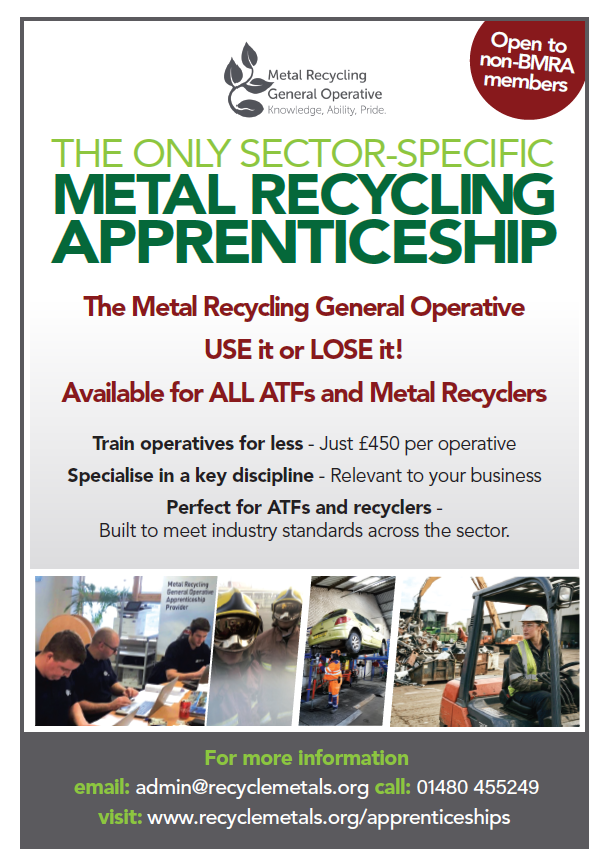
Working for companies of all sizes, from large multi-nationals to SMEs to family-run independents, the Metal Recycling General Operative (MRGO) role sees an apprentice taking on a wide range of different tasks and responsibilities both outside on the yard and in an office-like environment.
For employers
A team player, an MRGO will be charged with handling all types of equipment and will perform the many tasks undertaken in a metal recycling yard. MRGOs will identify different metals, sort and separate them into grades and understand the commercial impact grading has on the organisation; over 100+ different metallic material groups are regularly traded. Other tasks could involve processing End-of-Life Vehicles (ELV), Waste Electronic and Electrical Equipment (WEEE) and Large Domestic Appliances (LDA).
For apprentices
You will develop a knowledge and appreciation of a wide range of processes, site administration, risk assessment as well as legislation relating to metal recycling. You will attain the skills to operate industry-specific and generic plant and equipment, such as a forklift truck, shear and cable strippers. Safety will form a key element of your role – you will be expected to work safely within a team to ensure materials are processed and handled in the correct and safest way.
As well as undertaking the core learnings, apprentices need to choose from one of five specialist routes:
- End-of-Life Vehicles Operative
- Material Classification Operative
- Material Handler (Specialist Equipment) Operative
- Waste Electrical & Electronic Equipment Operative
- Weighbridge Operative
Click here to read all about the knowledge, skills and behavours an MRGO apprentice will acquire.
Why employ an apprentice?
With an ageing workforce and a lack of willing and capable operatives, taking on an apprentice is a simple solution to plugging that gap. It also enables skilled workers looking to retire to pass on their knowledge.
For SMEs in particular, apprentices are a very cost-effective way to employ and train employees.
This is because while large companies that pay more than £3m in wages pay an Apprenticeship Levy, smaller companies don't pay the Levy and the Government also funds 95 percent of the cost of your apprenticeship training, which means you only pay £450.
You may also choose to pay the National Minimum Wage for apprentices which, for those aged 19 or over in their first year is £8.00 per hour and thereafter rises to the National Minimum Wage or National Living Wage rate for their age.
For further information, get in touch with [email protected].
If you have any questions, then you can also call the Apprenticeship Service directly on 08000 150600.