
While compiling the commemorative edition of Scrapbook, due out this week, BMRA members kindly shared their own stories and memories with us. Space within the edition meant that we were not able to share all the stories in their entirety, we’ll be sharing them on the BMRA website.
Here is a Q&A with BMRA service member, TOMRA.
Looking back over the past 25 years, is there a piece of legislation or policy (or a significant market change) that required TOMRA to re-evaluate their offerings to the UK metals recycling market?
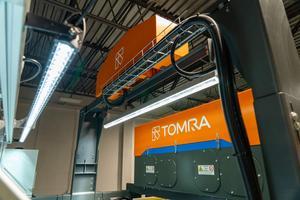
The UK market has progressively shifted away from volume and toward absolute purity. In the early 2000s (2000–2003), EU producer responsibility directives such as ELV and WEEE introduced strict recovery targets, transforming sensor-based sorting into an operational necessity. Recyclers were then forced to extract high-purity fractions from complex waste streams. In 2013, the Scrap Metal Dealers Act professionalised the sector, banning cash transactions and driving consolidation. This shifted the landscape in favour of larger operators with the capital required for automated, high-volume processing. The most significant external pressure came in 2018 with China's National Sword policy, which virtually banned the import of contaminated scrap and imposed a strict 0.5% contamination limit, effectively shutting off a primary destination for UK waste exports. This left UK processors with little choice but to fast-track their modernisation. Today, the UK Environment Act 2021 and broader net-zero strategies continue this transformation, making sensor-based sorting a core requirement for high-precision, secondary raw material production.
What equipment was TOMRA selling the most of 25 years ago, as compared to now?
Two decades ago, TOMRA’s sales in the metals sector were largely focused on specialised metal detection systems for basic non-ferrous recovery. Equipped with early-generation electromagnetic sensors, the primary job of these machines was bulk separation to capture generic heavy metal fractions from post-fragmentiser shredder residue. At the time, success was defined by simple landfill diversion and bulk volume recovery.
Today, the market has shifted toward high-value material upgrading. Our current metals product portfolio reflects this transition, led by our newly re-engineered, modular FINDER™ platform which can be enhanced with GAINnext™ deep learning AI to process complex streams like e-scrap or clean mixed aluminium fractions like Zorba and Twitch. Our portfolio also includes our high-throughput X-TRACT™ units that use dual-energy X-ray transmission (XRT) for density-based separation of cast and wrought aluminium. For final refinement, the AUTOSORT™ PULSE uses dynamic laser induced breakdown spectroscopy (LIBS) designed for high-speed elemental analysis to isolate specific aluminium alloy grades. The goal is no longer raw tonnage, but delivering furnace-ready, specification-grade secondary raw materials directly to industrial production.
How has TOMRA seen the market change as material has become more complex, more hazardous, less recyclable (requiring greater separation)?
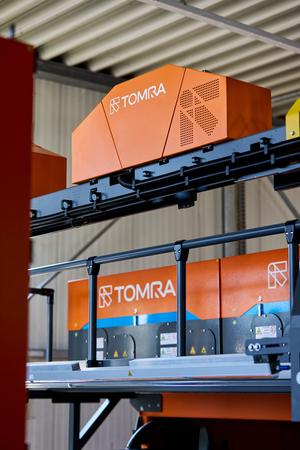
The easy wins of metals recycling, such as bulk ferrous recovery via traditional magnets, are largely solved. Historically, the UK sector was steel-driven, but automotive lightweighting has steadily reduced steel composition while increasing complex non-ferrous fractions. As a result, modern vehicles, electronics and appliances are now extremely complex, containing mixed components, bonded composites and hazardous elements like lithium-ion batteries.
This increase in material complexity means basic mechanical separation can no longer recover material streams at the volume and purity levels required by modern industrial standards. Even minor cross-contamination downgrades the value of the final fraction, leading to significant financial penalties from smelters.
TOMRA has adapted to these evolving streams by combining advanced multi-sensor architectures with deep learning technology. Rather than relying solely on conventional sensor systems, our solutions use artificial neural networks to solve highly complex material classification tasks. This allows processors to confidently isolate difficult fractions – such as insulated copper wires, printed circuit boards and complex composites – maximising high-purity yields from even the most challenging scrap profiles.
Conversely, has TOMRA seen material become more recyclable as eco-design becomes a greater consideration.
The market has been simultaneously moving in two directions. On one hand, circular economy policies have encouraged manufacturers to design for recycling by standardising aluminium alloys, using fewer material types and simplifying product structures. When eco-design succeeds, high-precision sorting technologies like dual-energy XRT and dynamic LIBS become even more effective because inbound fractions are more predictable, allowing processors to achieve furnace-ready alloy grades with optimal efficiency.
Conversely, performance-driven product innovation often outpaces eco-design. Advanced coatings, multi-material bonding, lightweighting trends and complex electronic assemblies mean that a vast portion of real-world scrap is operationally more complex than ever. While eco-design improves theoretical recyclability, it relies entirely on high-performance sorting to actually close the loop. Ultimately, eco-design does not replace the need for advanced sorting, it raises the bar for what sorting must achieve to reliably deliver high-purity, specification-grade secondary raw materials at industrial scale.
What are TOMRA’s hopes for the industry, particularly thinking about the UK steel industry, and its plans for more EAF’s and greater use of recycled material domestically.
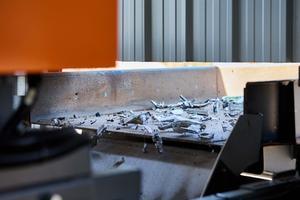
The UK generates over 10 million tonnes of scrap steel annually, yet traditionally exports roughly 80% of it, missing out on the chance to retain that value within the domestic supply chain. At the same time, the domestic steel sector is undertaking a historic transition toward low-carbon Electric Arc Furnaces (EAFs) to meet net-zero targets.
TOMRA believes the UK has a vast opportunity to connect its high scrap availability with domestic steelmaking, keeping valuable resources onshore. Crucially, EAFs require consistent, ultra-clean feedstock with strict chemical and alloy control to prevent downcycling. Scrap can no longer be treated as a mere waste commodity; it must be refined into a specification-grade feedstock.
By investing heavily in advanced sorting facilities right here at home, the UK can clean up scrap before it reaches the furnaces, supplying British steelmakers with high-quality recycled material while securing domestic supply chains.
What, in the next 25 years, does TOMRA think will affect the industry?
The next 25 years will see metals recycling transform from a traditional waste-management sector into a core part of industrial production and supply chain security. Stricter global export rules, such as the Basel Convention amendments, will inevitably restrict traditional shipping routes, meaning the UK will have to process and use far more of its own scrap. At the same time, the rapid growth of electric vehicles and complex electronics will mean sorting much smaller, highly diverse fractions of material.
TOMRA is preparing for this future by treating sorting not just as a mechanical process but as a data and control challenge. Recycling plants will evolve into fully digital, connected ecosystems, running advanced sensor technologies combined with smart, adaptive AI platforms that optimise processing in real time to deliver maximum resource value.
As recycling becomes essential for national resource security, new rules like digital product passports will demand absolute traceability for every material. Our technology will continue to advance, giving operators the process intelligence they need to confidently turn complex waste into high-spec industrial feedstock.