
UK metals recycling’s operational emissions could fall 93% by 2050
However, Government support is key to accelerate UK metals recycling becoming the first in the world to produce net zero recycled metal
A Carbon Footprint Assessment (the Assessment) commissioned by the British Metals Recycling Association (BMRA) has concluded that UK metals recycling’s Scope 1 and Scope 2 emissions could fall 93% by 2050 and switching to steel made from Electric Arc Furnace’s (EAFs) alone could reduce the industry’s emission footprint by 38%.
The comprehensive Assessment, the first of its kind for the UK’s metals recycling industry, was conducted by Tunley Environmental to better understand emissions and to align the industry with the UK Government’s legally binding net zero target.
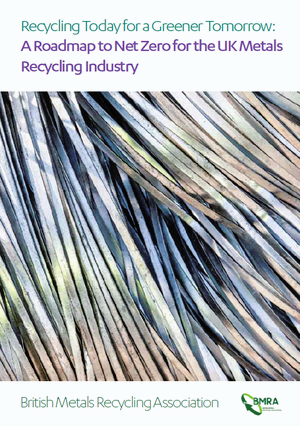
The Assessment, which is summarised in the BMRA authored Recycling Today for a Greener Tomorrow: A Roadmap to Net Zero for the UK Metals Recycling Industry, concludes that the industry could see dramatic decreases in both its Scope 1 and 2 (direct) and Scope 3 (indirect) emissions.
On top of the 93% reduction in Scope 1 and Scope 2 emissions, the overall footprint of the UK metals recycling industry – including emissions from upstream and downstream third parties which includes smelting and refining by steelmakers – could reduce by 70%.
Based on the evidence provided within the Assessment, the BMRA has listed five key asks of the UK Government within its Roadmap. These are:
- To ensure that metals recycling businesses are eligible for the British Industrial Competitiveness Scheme.
- To expand the uptake of biofuels by introducing a 10p per litre reduction in fuel duty for biofuels like Hydrotreated Vegetable Oil (HVO), with an annual review to ensure competitiveness.
- To provide affordable financing, allowing operators to secure Government-backed low-interest rate loans for power and grid connection infrastructure upgrades.
- To incorporate fee modulation – based on recyclability and recycled content criteria – into upcoming reforms of the Batteries, End-of-Life Vehicle, and Waste Electrical and Electronic Equipment Regulations.
- To adopt science-based standards, such as the Steel Climate Standard formulated by the Global Steel Climate Council, which do not penalise recycled content.
“This Assessment not only reinforces metals recycling’s current environmental and sustainable credentials, but shows how it can go further, substantially reducing its Scope 1, 2 and 3 emissions, and progress towards the UK being the first in the world to produce net zero recycled metal”, said James Kelly, CEO, BMRA. “However, like most progressive and innovative ideas, changes to Government policy are needed to support the industry to enable this transition. The five proposed policy changes will accelerate the journey to net zero, safeguard the industry, make operational costs cheaper, and the move to sustainable processes easier.”
BMRA’s President, Susie Burrage OBE, stated on the launch of report: “Metals recycling has always been central to the UK’s circular economy, and have been preventing emissions and conserving vital resources for generations. But, as we strive for net zero, our industry’s role has never been more important. This Roadmap shows that with the right policies, collaboration, and investment, the UK metal recyclers can accelerate towards being the first in the world to produce a net zero recycled metal.”
To read both the Recycling Today for a Greener Tomorrow: A Roadmap to Net Zero for the UK Metals Recycling Industry and the Carbon Footprint Assessment see below.